How Bosco Verticale’s vertical forest translates — and doesn’t — to a tropical site in Victoria Island
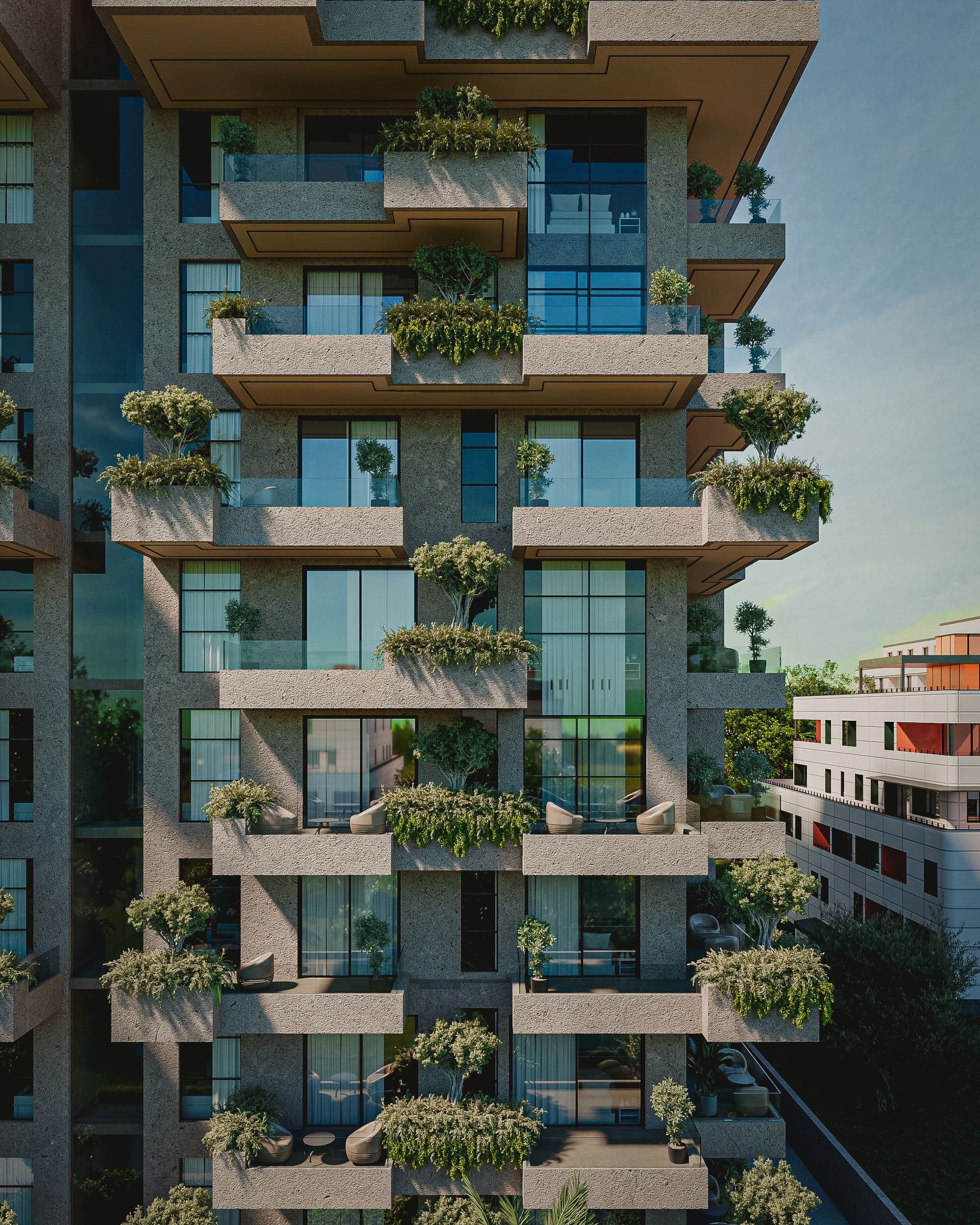
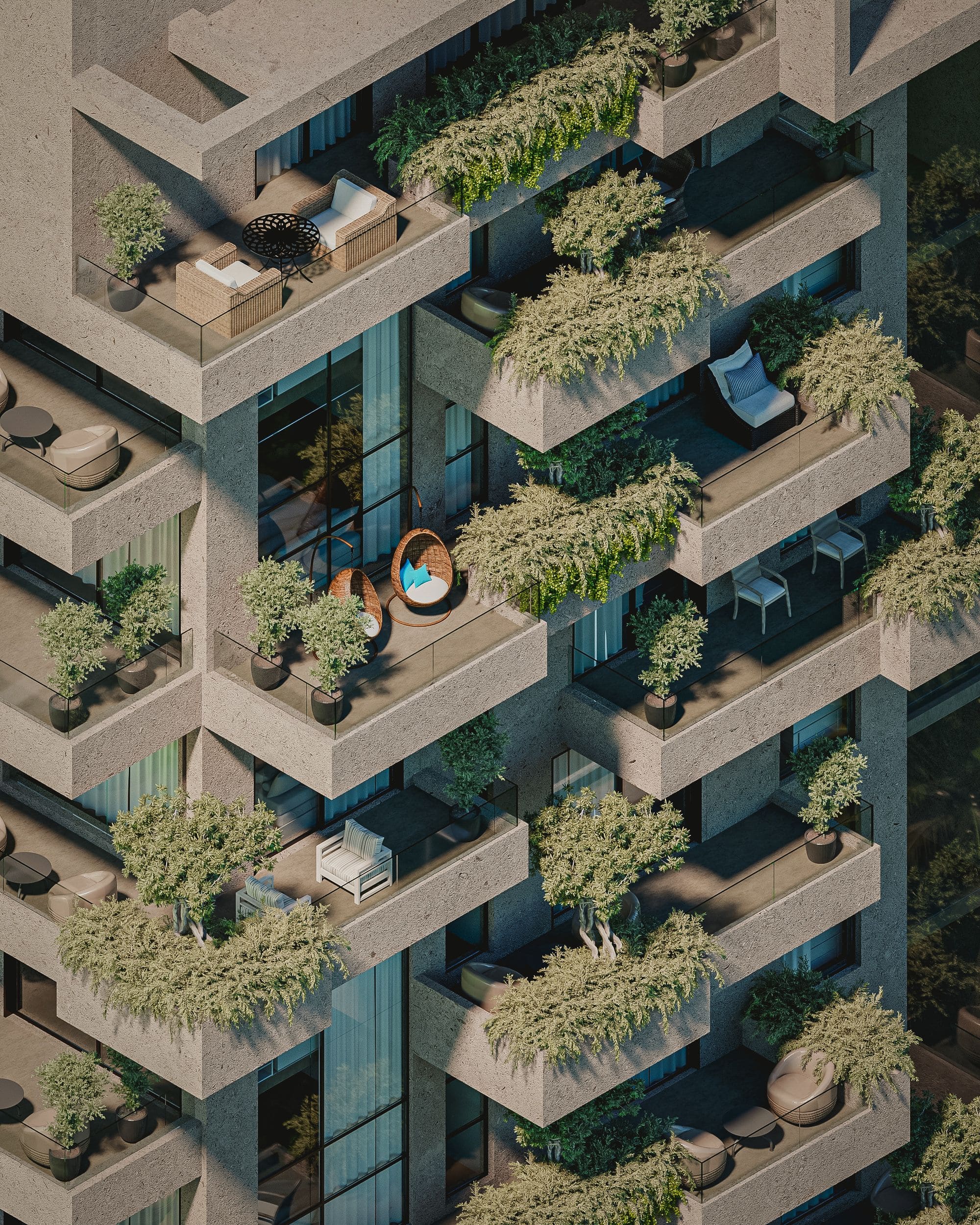
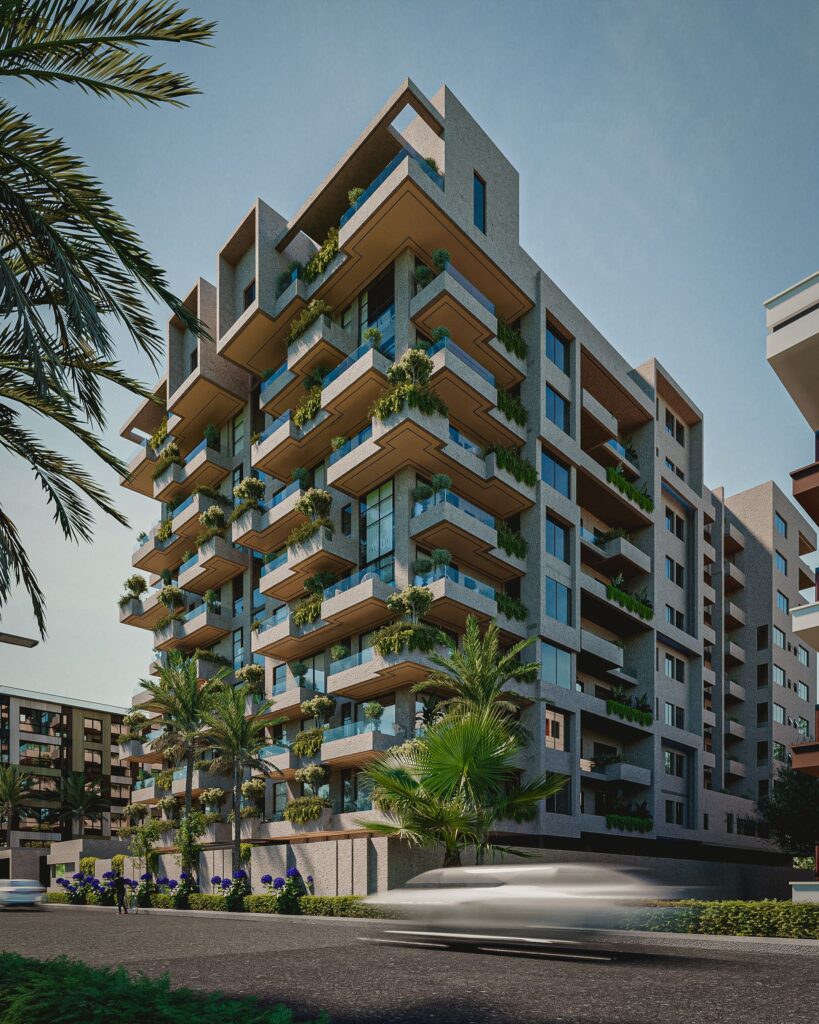
At Number 8, Idowu Martins in Victoria Island, the balconies do more work than balconies usually do — stepping and cantilevering against one another, planting spilling down the facade rather than sitting on top of it. It’s easy to call this biophilic design and leave it there. We’d rather explain what it actually costs, and what it’s worth.
The reference everyone reaches for is Bosco Verticale, Stefano Boeri’s Milan towers: roughly 800 trees and several thousand shrubs, engineered to carry the live load of saturated soil on cantilevered balconies up to 27 storeys up, maintained since 2014 by arborists on permanent contract. It proved a residential tower could function as forest, not just wear one. Every planted high-rise built since — ours included — owes it something.
But Milan isn’t Victoria Island. Bosco Verticale’s oak and maple go dormant for a real winter; Lagos planting grows year-round, at speed, with no season to recover in. The closer precedent for us is Singapore — WOHA’s tropical towers, buildings like Oasia Hotel Downtown, designed for monsoon rain and total humidity as a baseline, not an exception. Milan proved the vertical forest was structurally possible. Tropical practice tells you how to keep one alive.
That’s the part that doesn’t photograph: structural allowance for wet, mature soil rather than dry delivery weight; drainage falls that shed a Lagos downpour without backing up on a party wall; planting specified against the actual elevation, not a generic palette, because what looks right in a render rarely survives a west-facing balcony on the fourteenth floor. None of it is romantic. All of it is why the romantic part survives
the first rainy season.
We took this brief on because Victoria Island is about as dense and paved-over as Lagos gets, and a tower here owes the site something back — shade, humidity, somewhere for the eye to rest. Bosco Verticale’s real contribution was proving this is a solvable structural problem, not a landscaping wish. Ours was solving it for a climate where the planting never sleeps.