
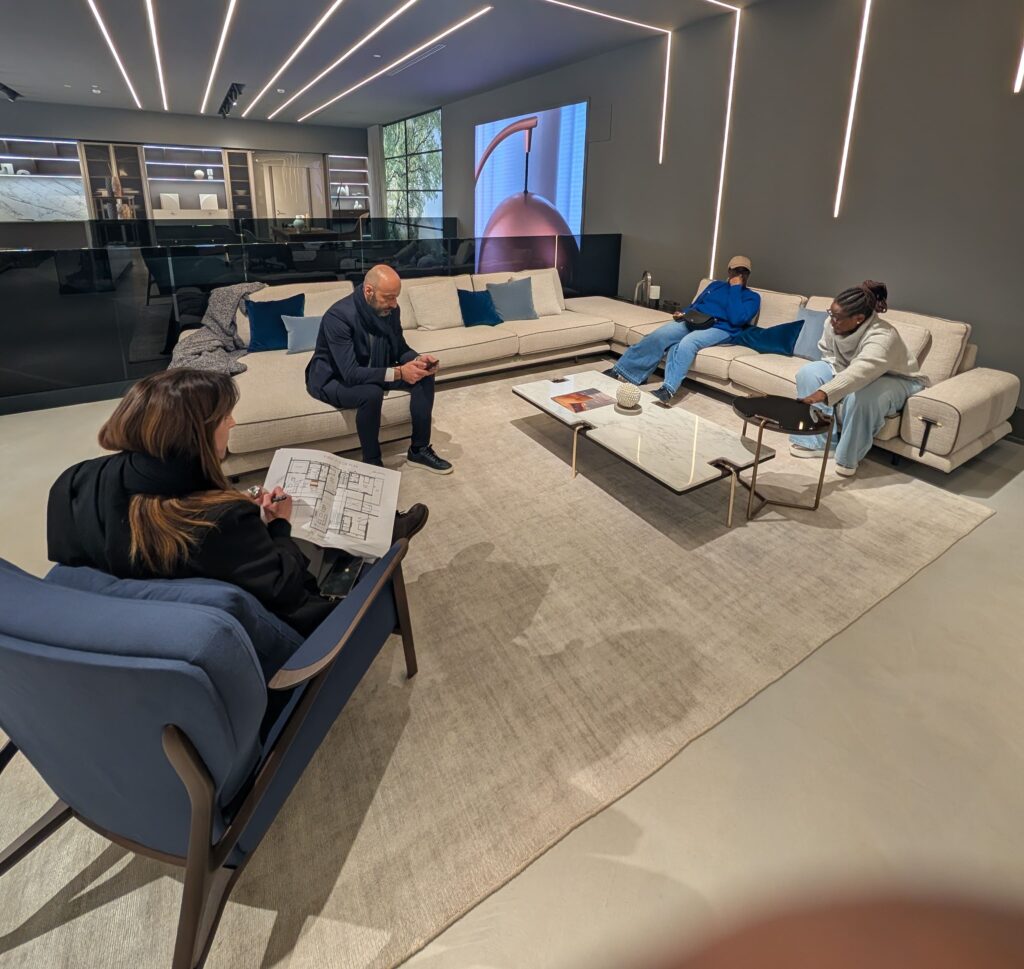
If you have been planning a home or a commercial fit-out and someone on your project team mentioned “FF&E,” you were probably nodding along while quietly wondering what it meant. You are not alone. FF&E stands for furniture, fixtures, and equipment, and it covers almost everything that gets brought into a building and installed once the structure itself is finished: sofas, dining tables, light fittings, kitchen appliances, bathroom fixtures, cabinet handles, even the specific fabric on a headboard. If a building is the body, FF&E is closer to everything that makes it livable.
At High Park, FF&E sourcing sits at the centre of how we actually deliver a project. It is not a shopping list handled at the end. It is a process we manage in person, across three continents, because the decisions made in a factory in Italy or a workshop in Vietnam shape how a space in Lagos will actually look and feel a year later.
Why furniture, fixtures, and equipment is bigger than it sounds
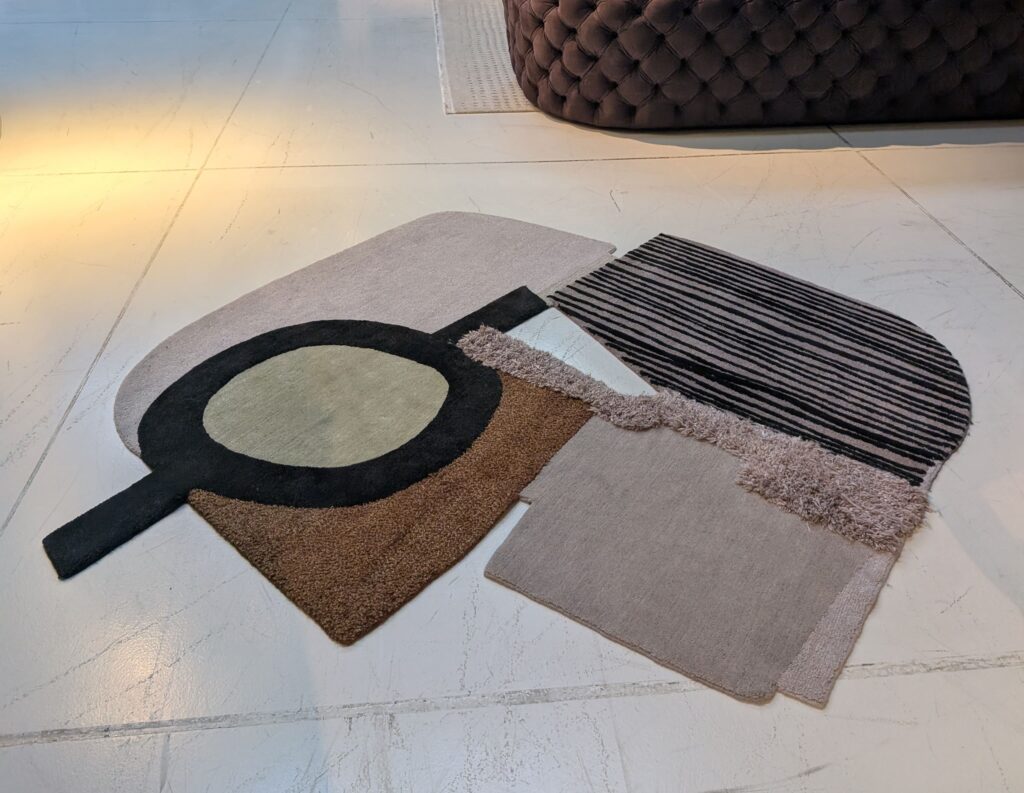
Most people hear “furniture” and picture a sofa or a dining chair. That is only a small part of what FF&E actually covers. Fixtures include the built-in elements that give a room its character: the light fittings recessed into a ceiling, the taps in a bathroom, the ironmongery on a cabinet door. Equipment covers the functional side: kitchen appliances, air conditioning units that sit inside the finished space, even specialist items like a home cinema screen.
The reason this distinction matters is cost and timing. A sofa can usually be swapped out later if a client changes their mind. A recessed light fitting or a built-in appliance cannot — not without cutting into a finished ceiling or countertop. That is why FF&E has to be planned early, alongside the architecture, rather than treated as decoration added once the building is done.
Why we travel to the markets ourselves
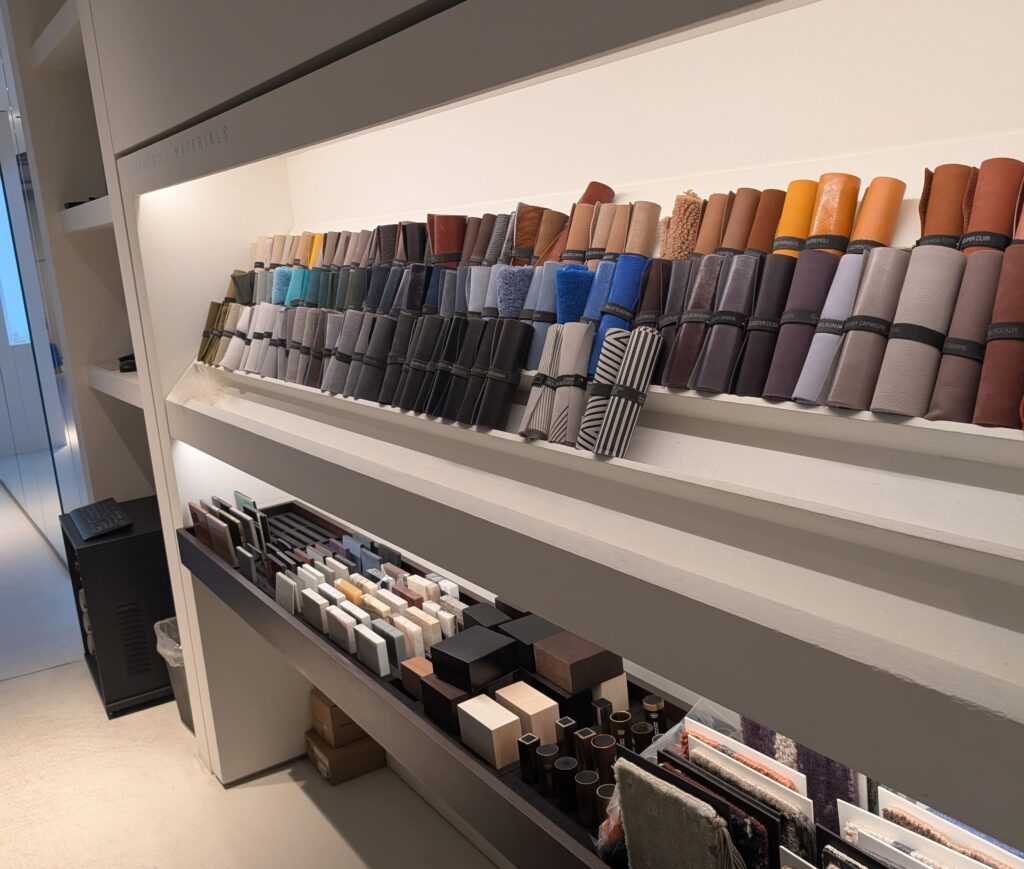
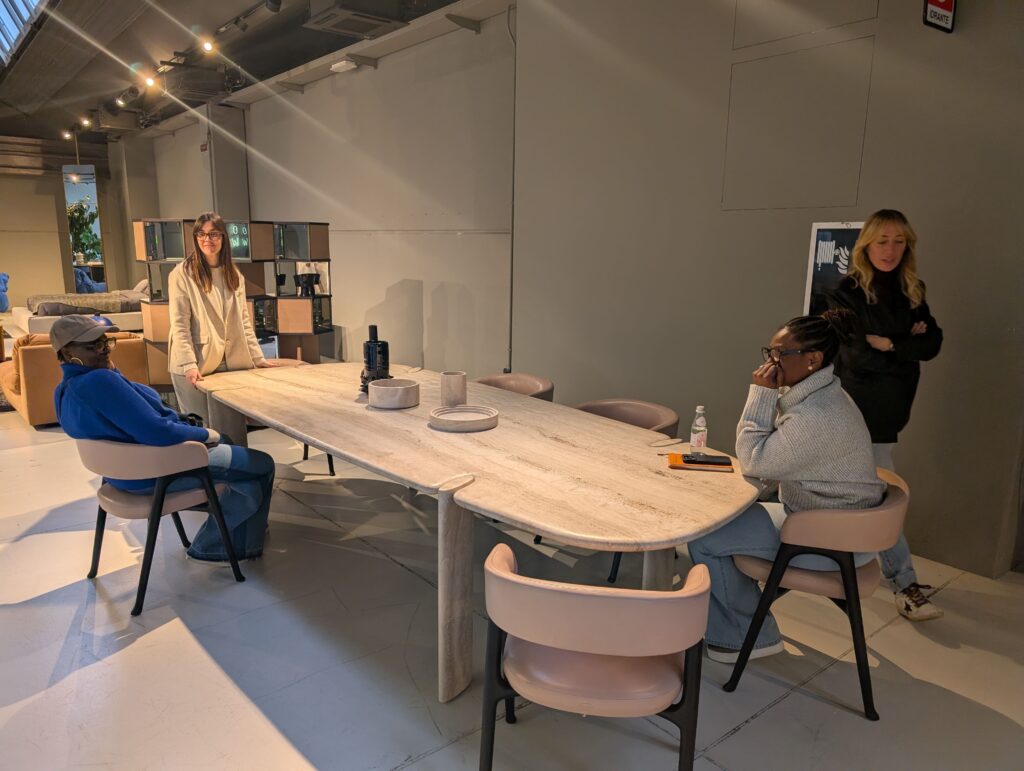
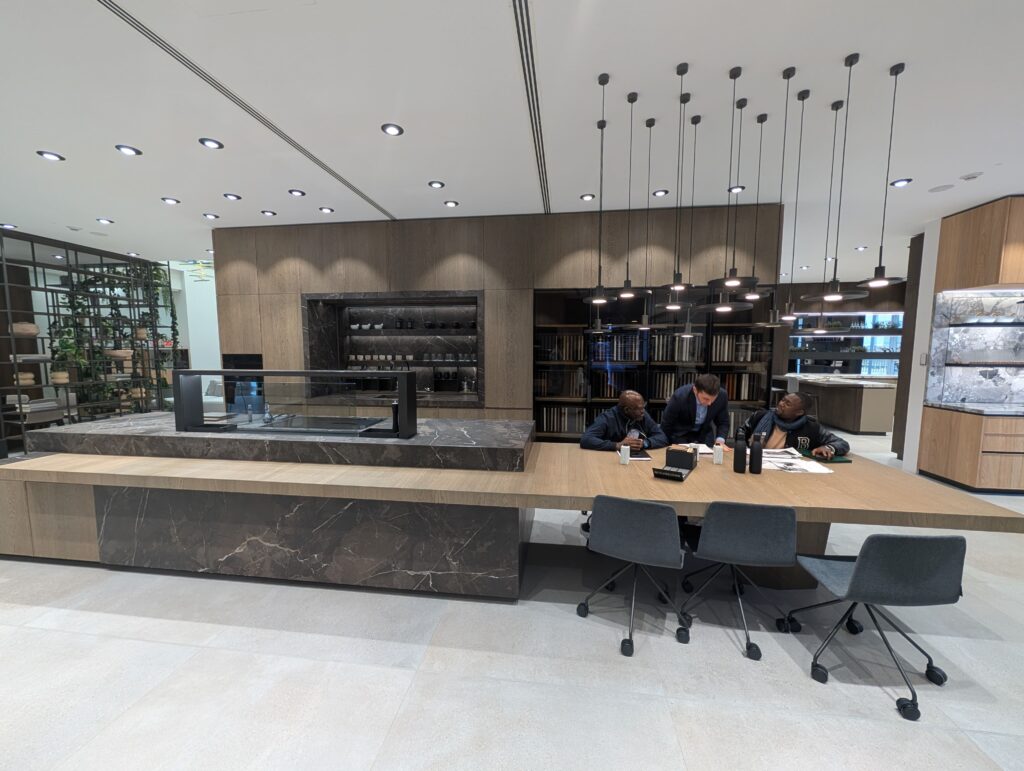
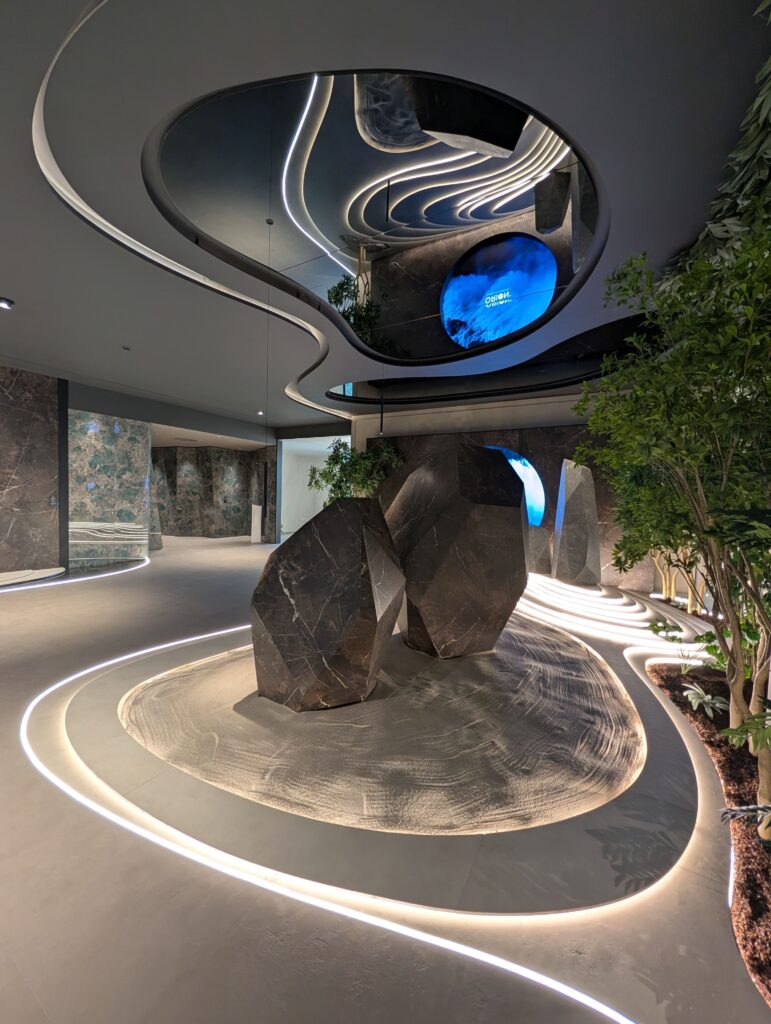
Our team travels to the markets in person, across Europe, Asia, and North America. We touch the finish of a material with our own hands, walk the factory floor, and talk through the exact details with the people who will actually make the piece. That direct contact shapes the design long before a single item is ever formally specified on paper.
There is a reason this cannot be done from a catalogue or a supplier’s website. A photograph can show you the colour of a stone or the shape of a chair, but it cannot show you how a marble vein will actually run across a full countertop, or how a fabric will hold up against Lagos humidity rather than a showroom in Milan. Standing in the factory, we can ask the maker to adjust a detail on the spot — something that is simply not possible once an order has already been placed remotely.
How supplier coordination against the drawings prevents expensive mistakes
Sourcing only works if it starts with supplier coordination against the technical drawings for that specific project, not a generic catalogue. Every fitting has to be specified against the exact measurements and tolerances of the space it is going into.
Precision here saves weeks later. A fitting specified to the wrong tolerance is not usually discovered on a factory floor where it can be corrected in an afternoon. It is discovered when the crate is already on a ship, or worse, when it arrives on site and does not sit flush against a wall that was built to a different measurement. This is why our team checks fittings against the actual as-built drawings, not the original concept drawings, before anything is placed into production.
Where projects actually go wrong: logistics
Logistics is where most programmes are won or lost. This is the part of FF&E sourcing that rarely gets discussed publicly, because it is unglamorous compared to choosing a fabric or a finish — but it is where the real risk sits.
Customs timing, freight windows, and site readiness all have to line up before a single crate is opened. A shipment can be manufactured perfectly and still arrive late because of a customs delay, a missed freight window, or a port backlog. Coordinating this across Europe, Asia, and North America into a single Lagos site means planning backwards from the handover date, then building in enough buffer to absorb the delays that are, realistically, going to happen somewhere along the route.
Installation oversight closes the loop
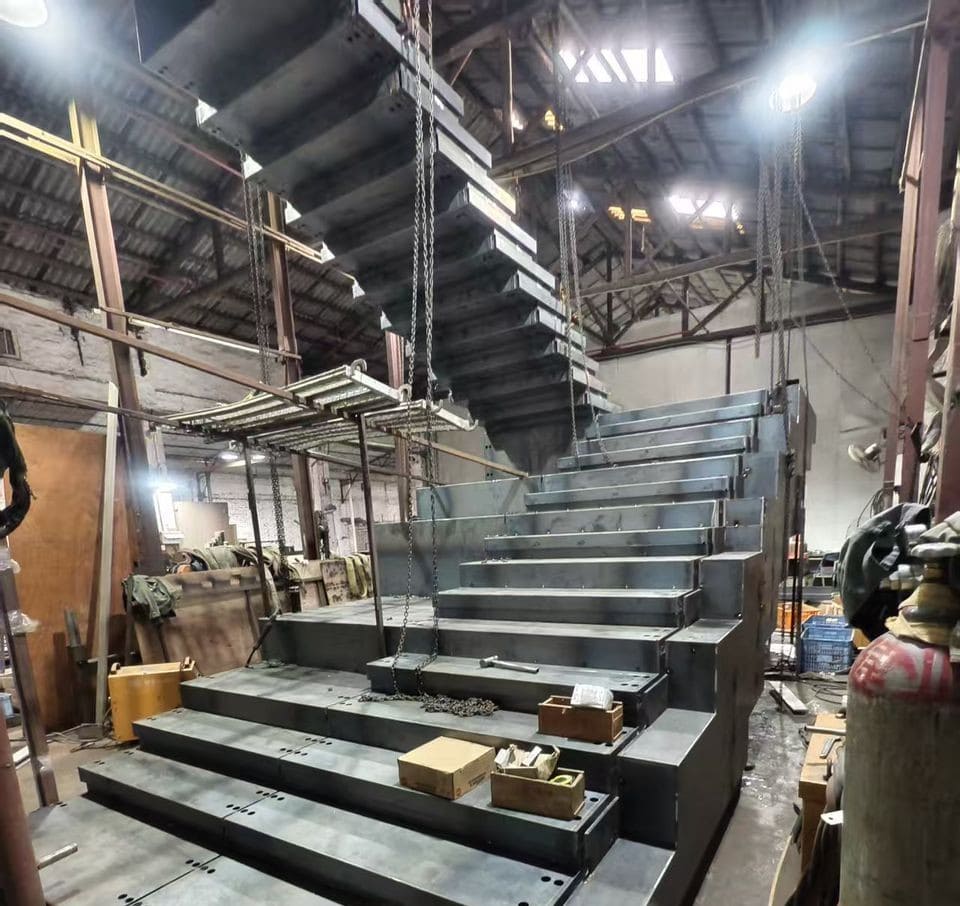
Installation oversight confirms that what arrives matches what was drawn, and that it is fitted the way the design intended — not the way that is quickest on the day. A skilled installer working without close oversight will often make small, reasonable-seeming decisions on site: mounting a light fitting a few centimetres off centre to avoid a wiring conflict, or adjusting the height of a handle. Together, across dozens of fittings in a single space, these are exactly what separate a space that feels resolved from one that feels slightly, unaccountably off.
Why this matters more in Lagos than it might elsewhere
In a city with an established, dense supply chain for high-end fittings, some of this risk is lower. Lagos does not have that same depth of local supply for many finishes and fittings, particularly at the level of quality a bespoke project usually calls for. That means most FF&E for a serious project has to come from somewhere else, which puts logistics and quality control at the centre of the process rather than at the edges.
This is part of why we built FF&E contracting into the studio’s core services rather than leaving it to a separate vendor. A designer who only draws the space and a separate party who only orders the furniture will always have a gap between them. Someone has to be responsible for both the design intent and the physical object that eventually has to match it.
Common misunderstandings about FF&E worth clearing up
“FF&E is just furniture shopping.” It includes furniture, but also every fixture and piece of equipment that is technically fitted rather than simply placed — from recessed lighting to kitchen appliances. Much of it has to be decided before certain walls or ceilings are even closed up.
“It can be decided at the end, once the building is finished.” Some of it can. A rug or a piece of freestanding furniture is flexible. A built-in appliance, a recessed light fitting, or anything that needs a specific electrical or plumbing connection has to be decided early enough to be built into the structure.
“A good catalogue photo is enough to specify a piece.” A photograph cannot show tolerance, weight, how a finish will read in Lagos light rather than studio lighting, or how consistent a natural material like stone or timber will actually be across a full order.